Your earliest experiences didn't just shape your childhood. They became the invisible rulebook you've been following in every relationship since.
Before you ever went on a first date, before you ever said "I love you" to a partner, before you ever got your heart broken, someone was already writing the rules for how you do love.
You didn't choose those rules. You didn't consent to them. But they're running in the background of every relationship you've had since.
That's not a theory. That's the thing I keep seeing over and over, in my own life and in the work I do with people every single day.
Your First Relationship Wrote the Blueprint
Long before romantic love entered the picture, you were already learning what love feels like. You were learning whether it's safe to need people. Whether closeness is comforting or threatening. Whether you are, at your core, someone worth staying for.
You learned all of this from your earliest caregivers, and you learned it before you had the words to describe it.
John Bowlby, the psychoanalyst who developed attachment theory, found that infants instinctively form emotional bonds with caregivers out of a raw survival need. Makes sense. As babies, we depend entirely on other people to keep us alive. So our nervous systems get very good, very fast, at reading the room. Is love consistent here? Is it safe to need things? Will someone show up?
The answers we internalized become what Bowlby called internal working models. Mental maps of what to expect from close relationships. And we carry those maps into adulthood, often without ever looking at them.
If your caregivers were warm and reliably present, you likely grew up with a foundational sense that you are safe, you matter, and your needs are not a burden. That becomes secure attachment. You can ask for what you need. You can tolerate intimacy without panic. You don't spend your energy performing to keep someone around.
But if love was inconsistent, distant, or conditional? The map looks different. And that's where most of us are actually operating from.
The Three Patterns I See Most Often
Anxious attachment forms when love was unpredictable. Sometimes warm, sometimes withdrawn. The lesson the child takes on is: love can disappear, so I have to work for it. As an adult, this often becomes performing. Staying small to avoid rocking the boat. Being overly accommodating. Monitoring every shift in the other person's energy and making it mean something about your worth. The inner monologue sounds like: "Did I do something wrong? Are they pulling away? Am I too much?"
Avoidant attachment forms when caregivers were emotionally distant or dismissive. The child learns that needing people is a liability, that intimacy is a burden. As an adult, this can look like emotional self-sufficiency, pulling away just as things deepen, and a performance of not needing anything. It protects from disappointment, but it also keeps genuine connection just out of reach.
Disorganized attachment forms in environments where the caregiver was both a source of comfort and a source of fear. The child ends up with a fragmented map: I want closeness, but it terrifies me. As an adult, this creates confusing push-pull dynamics. Idealizing someone one moment, mistrusting them the next. Craving love and sabotaging it at the same time.
None of these patterns make you broken. They make you human. They were adaptations. They worked, once. The question is whether they're still working for you now.
The Blueprint Isn't a Life Sentence
Knowing the information is only half the battle. The implementation and the action are the other half.
Knowing your attachment style doesn't fix anything on its own. Insight is the beginning, not the destination.
I think about this in terms of stages. First comes awakening, actually noticing the pattern. Then reckoning, accepting what it has cost you without excuses or softening. Then mapping, seeing specifically how it has played out in your relationships. And then the harder work: discipline, becoming, and integration. Not a single moment of change, but the slow and deliberate practice of showing up differently, over and over, until a new way of relating starts to feel like home.
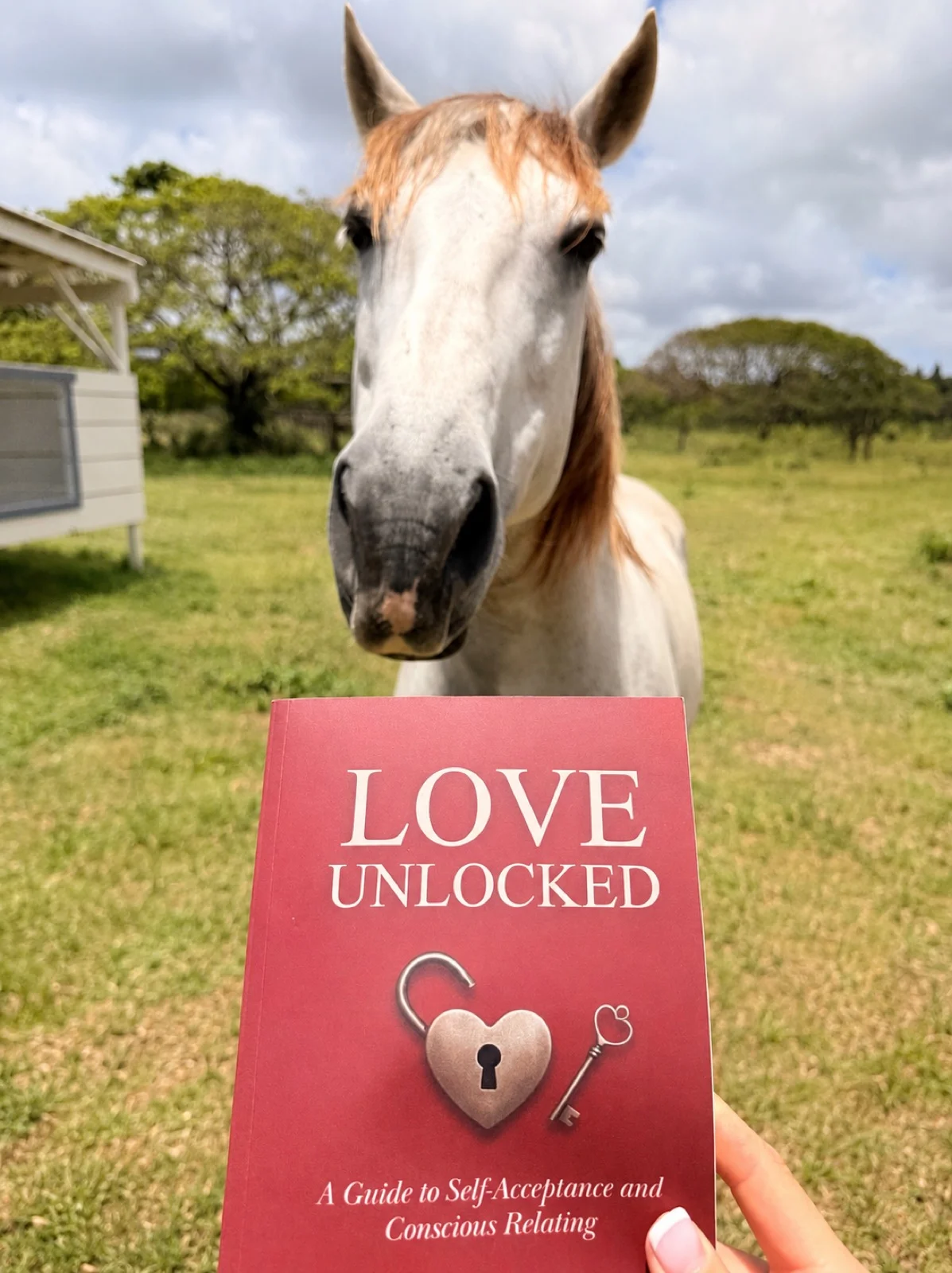
In my book Love Unlocked, I walk through these seven stages in detail, because understanding the blueprint is only useful if you actually use that understanding to build something better.
The work I do with people through coaching at Love Unlocked is rooted in exactly this. Not just identifying what shaped you, but actively choosing what comes next.
Carl Jung talked about the persona, the mask we construct to earn love and approval. A child who learns that being expressive leads to disapproval learns to suppress that expressiveness. A child who learns that vulnerability gets met with dismissal learns to perform composure. The mask becomes so familiar that we forget it's a mask. We confuse the performance with who we actually are.
And then we wonder why we feel lonely in relationships that look fine from the outside.
The path back to yourself involves peeling that back. It's not comfortable. But on the other side of that discomfort are the answers you can't reach any other way. That's something I've written about and spoken about at length, and you can find more of that work over at zacspowart.com.
How to Start Rewriting Yours
You don't need to overhaul everything at once. Start here.
For a few days, pay attention to every time you use the word love. What do you actually mean when you say it? What does it feel like in your body? Is it coming from fullness, or from fear of losing something?
Then go a layer deeper. Ask yourself whose definition of love you are carrying. Your parents'? A past partner's? A version you absorbed from watching others as a child? What did you inherit, and what did it cost you?
Then look at the patterns. Where do you give love freely? Where do you pull back? Where do you reject love even when it's genuinely offered, because it doesn't look the way you expected it to?
This is mapping. And it matters because you can't choose a different path until you can actually see the one you've been walking.
The goal isn't to become someone new. It's to come home to who you already are underneath all the conditioning. The version of you that doesn't have to perform to be worthy. The version that can receive love without bracing. The version that can offer love from a grounded place, not from fear or habit.
That version exists. The blueprint just needs rewriting.
So here's the question I want to leave you with: when you look at the way you give and receive love right now, are you acting from a place you chose, or a place you inherited?

Ready to go deeper?
If this resonated, my book Love Unlocked goes further into attachment, identity, and what conscious relating actually looks like in practice.
Want to work through your patterns together? I offer 1:1 Clinical Coaching and a 90-day container for people ready to break cycles and come home to themselves. Learn more at loveunlocked.com.