Independence says I don't need you. Interdependence says I choose you. Here's how to build a 'we' without dissolving the 'me'.
There are two kinds of love I want to talk about.
The kind that asks you to give everything, and the kind that invites you to bring everything.
They can look almost identical from the outside. Two people, deeply entwined, calling each other home. But underneath, they run on completely different operating systems. The difference comes down to one word that most of us were never really taught: sovereignty.
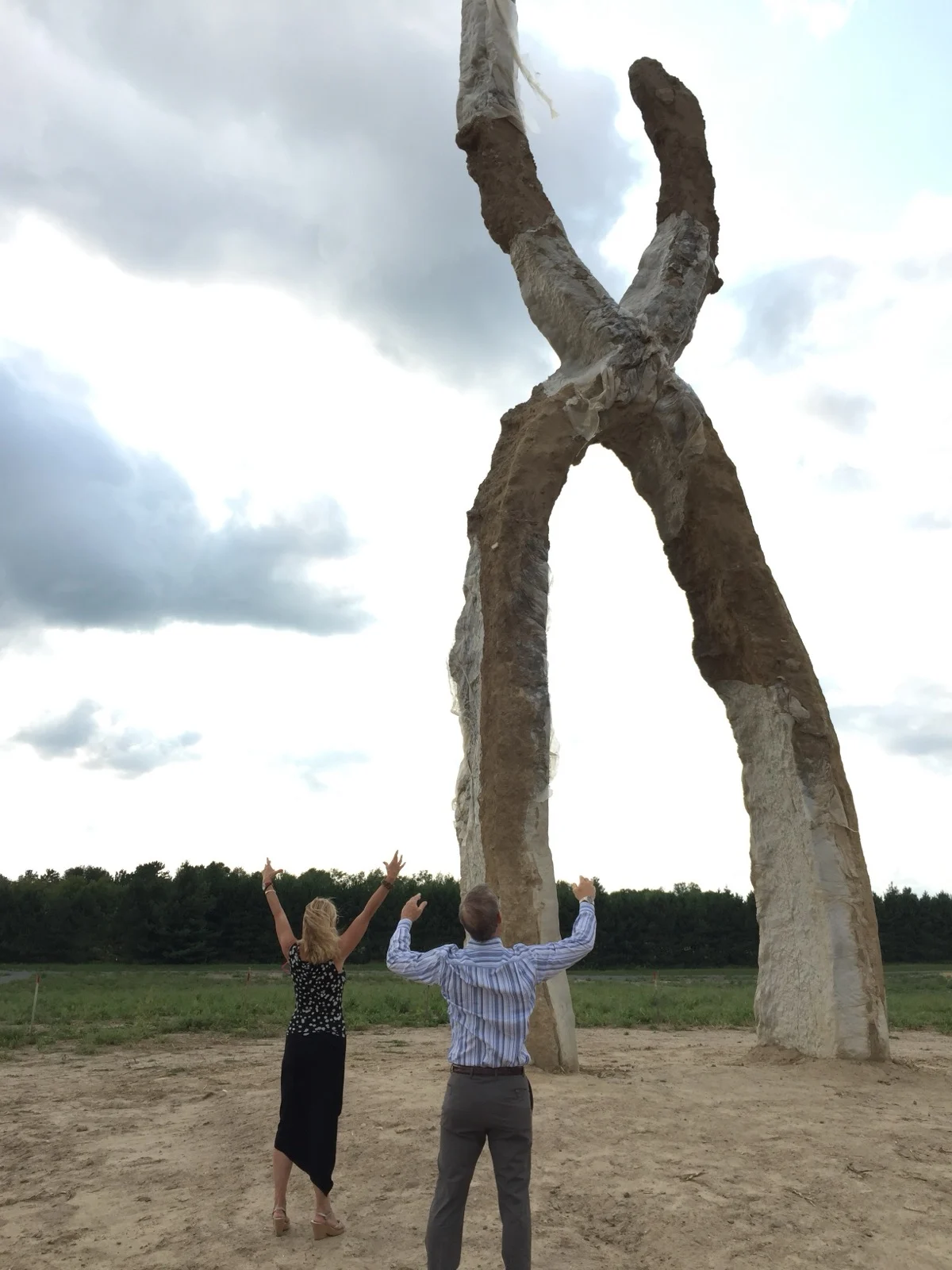
Independence Isn't the Goal
We tend to treat independence like the healthy finish line. Don't need anyone. Handle it all yourself. Never be a burden. And after enough heartbreak, that armor makes sense.
But independence, strictly speaking, means acting and deciding without relying on others. Taken into a relationship, that is just a nicer-looking wall. What we actually want is interdependence, and the two words are easy to confuse.
Interdependence is when you rely on another person and there is genuine mutual benefit. Needs get voiced, not hinted at. Boundaries get respected, not punished. Growth is mutual, not one-sided. Support flows freely, but without strings attached. There is no pressure to merge, only an invitation to meet.
That is where sovereignty comes in. To be sovereign in a relationship is not to be separate. It is not about distance or rigid autonomy. It is the practice of staying rooted in your own inner world while letting someone else into it. Choosing connection from fullness instead of fear. From true desire instead of need.
A sovereign partner takes full ownership of their own emotions rather than their partner's. They communicate with clarity. They commit to their own growth instead of outsourcing it to the relationship. And crucially, they do not sit around quietly hoping their partner will notice their needs and find the courage to name them for them. They speak up. If the guilt around asking for things is what stops you, I wrote more about that in why you feel guilty for having boundaries.
The "Me" and the "We"
One of the quiet challenges of any long relationship is learning to build a "we" without dissolving the "me."
In the early days we happily adopt each other's routines, inside jokes, and habits. That is part of the fun. But over time, healthy couples recalibrate toward an equilibrium of two "me's" and one "we." There are basically three ways this shakes out.
In the first, one partner's identity quietly takes the lead. One person wears the pants, the other adapts and compromises, and what started as harmony slowly becomes self-abandonment. These relationships often have high commitment but low satisfaction, and they tend to last only because one person fears the pain of leaving more than the pain of staying small.
The third is the same thing in reverse. One partner unconsciously centers their own values, lifestyle, and preferences, and expects the other to arrange themselves around it. It is rarely intentional. It is usually just habit that nobody named until the imbalance was baked in.
The middle option is the one worth aiming for. Both partners actively contribute to the identity of the relationship. The "we" is co-created, not imposed. Differences are accepted and even appreciated. Conflict is met with curiosity instead of contempt. Research consistently shows this is where the highest satisfaction and trust live, and where couples find the resilience to weather real storms. That is what "couple goals" should actually mean, not the hashtag version.
Here is the part that matters most: none of these are fixed. You might be in one dynamic in this relationship and a totally different one in the next, or cycle through all three with the same person over years. Which is exactly why you have to stay consciously engaged. We are always shaping and being shaped by the people we love. The only real choice is whether we do it mindfully.
You Are the Author of Your Own Story
Who you are is not fixed, and neither is how you love.
Erik Erikson, one of my favorite developmental psychologists, framed adolescence as the period where we forge a stable sense of self, and that foundation shapes our capacity for real intimacy later. When we get to explore and integrate who we are, we arrive at what he called identity achievement, and we can connect deeply without dissolving into someone else. When that process gets rushed or skipped, we are left with role confusion, a foggy sense of self that struggles to commit, express, or risk true vulnerability. Longitudinal studies back this up. Ego development at fifteen predicts relational capacity at twenty-five.
The good news is that the story is never finished. Narrative Identity theory says our sense of self is built from the stories we tell about our own experiences, and that we are genuinely the authors of our own lives. A story that treats every ending as a failure breeds shame and fear. A story that frames endings as openings to grow becomes a source of strength.
You do not have to be a perfect narrator or have a clean story to love well. You just have to be aware of the story you are carrying, because without that awareness we tend to repeat old patterns and lose ourselves the moment things get close. Relationships are where that awareness gets tested. They are the mirror that shows us the spinach in our teeth. As the Buddhist idea goes, what you resist persists. There is no real escape from ourselves, so we may as well let the people we love help us grow on purpose. That kind of staying-whole-while-close is something I unpack further in how to stay whole while deeply in love.
So the question I will leave you with is this. In your closest relationship, are you giving everything away to keep the peace, or bringing everything you are to the table? One slowly erases you. The other is where love actually gets to happen.

Ready to go deeper?
If this resonated, my book Love Unlocked goes deep on sovereignty, interdependence, and holding onto yourself while loving someone fully.
Want to do this work in a structured, supported way? I offer 1:1 Clinical Coaching and a 90-day container for people ready to build a "we" without losing the "me." Learn more at zacspowart.com.