We're taught love should feel like fireworks. But chemistry and love are not the same thing, and the moment the high fades is not the moment love fails.
I spent a long time chasing a feeling and calling it love.
The text back that made my whole day. The rush of a first kiss. That electric, slightly anxious buzz of not quite knowing where I stood with someone. I thought that was the good stuff. I thought that was proof.
It took me years, and a lot of clinical training on top of my own lived experience, to understand something that nobody really teaches you: most of us aren't chasing love at all. We're chasing a feeling we were taught to associate with love. And that confusion quietly runs a lot of our relationships.
This is the feel-good trap.
The Chemistry Confusion
Attraction begins with chemistry, quite literally.
When you meet someone who lights you up, your brain floods with dopamine, the neurotransmitter tied to reward, anticipation, and motivation. It is the same chemical that drives the pursuit in addiction, which is something I know intimately after nearly two decades sober. Dopamine wires us for the exciting chase of more. The giddy feeling when someone texts back, the thrill of not knowing where you stand, the high after a first kiss. Your brain reads all of it as novelty and uncertainty, and it feels amazing, so we learn to call it love.
Then there is oxytocin, the bonding hormone released through touch, eye contact, and intimacy. Here is the catch. Oxytocin bonds us indiscriminately. It registers proximity, not quality. It does not check whether the other person is consistent, emotionally available, or even safe. So you can end up feeling profoundly connected to someone who isn't actually showing up for you.
If you have ever asked yourself why you still feel so bonded to someone who causes you pain, that is a big part of the answer. The body does not always distinguish between love and attachment. It only knows what it has been conditioned to bond with.
There is a reason this is such a hard fight to win in the moment. The instinctual, older part of the brain, the limbic system, tends to override the younger, more rational prefrontal cortex. It is not a fair matchup. One is running ancient survival software, the other is trying to reason and plan. Dialectical Behavior Therapy calls the balance point between the emotional mind and the rational mind the wise mind. That overlap, feeling your feelings while still thinking clearly, is where better choices live. Not in the high, and not in cold logic either.
The Fairy Tales We Were Raised On
We didn't invent the feel-good trap on our own. We were handed it.
For a lot of us, the earliest picture of what love should look like came from Disney. And I say that as a genuine fan, so this is no shade. But it is worth looking at honestly. The original fairy tales collected by the Brothers Grimm were dark, gritty cautionary tales. Disney took those raw stories and script-doctored them into something polished and palatable. The mess got smoothed over and replaced with instant chemistry and neat endings.
Cinderella gets saved by being chosen. Ariel literally gives up her voice for a man. Sleeping Beauty is awakened by a kiss, a passive recipient of her own destiny. Charming stories, but they quietly imprint a belief: that love is a magical event that proves your worth, cures your loneliness, and saves you from yourself.
Nobody ever shows us Cinderella Part Two, where Prince Charming has a dad bod and they are negotiating whose turn it is to do the dishes. And honestly, would we even watch it?
Those early scripts do not disappear. They become a subconscious expectation that love should arrive with fireworks and carry us off into the sunset. So when the fireworks fade, as they always do, we assume something has gone wrong.
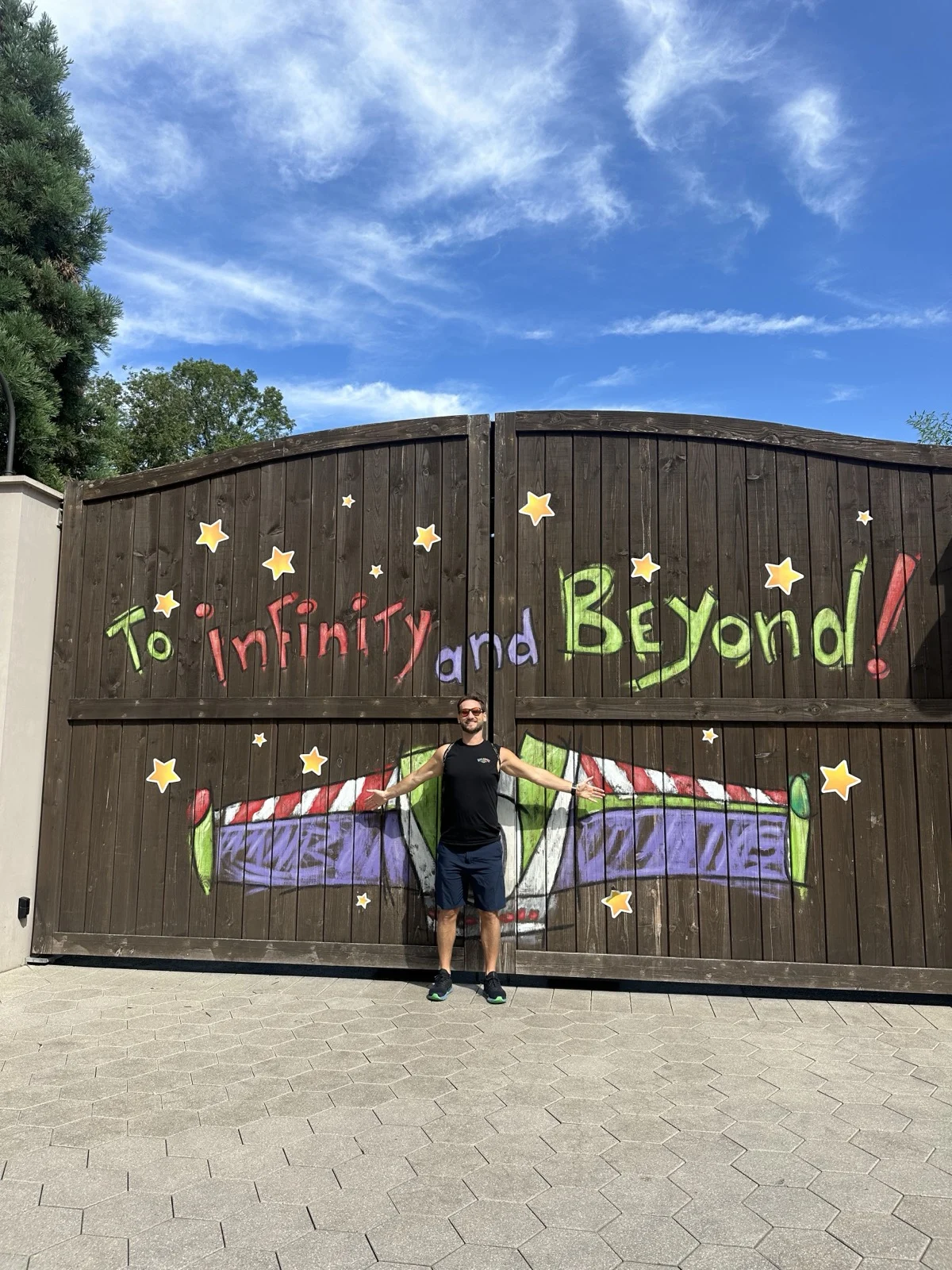
When the Buzz Fades
Now layer modern dating on top of all that conditioning.
For the price of a subscription, you can access nearly every single person on the planet and swipe through them like a catalog. It sounds like abundance. In practice it is overwhelm and analysis paralysis. One study of dating app trends found that eighty percent of women were pursuing the top twenty percent of men. The math simply does not work. There are not enough to go around, but the endless scroll keeps whispering that someone better is one swipe away.
So why stay when things stop feeling exciting? Why sit through any friction when Ariana Grande's "thank u, next" is right there as an option?
Here is the trap, fully sprung. We come to believe love should always feel energizing, and we treat the absence of the high as the absence of love. When the chemistry naturally settles, we assume the connection failed, and we go chasing the buzz somewhere new. Or we stay stuck, chasing the echo of a feeling that was never built to last.
But feelings are not facts. That is not me dismissing your feelings, they matter and they come from somewhere real. It is me saying they are e-motion, energy in motion, and like waves they rise and fall and dissipate. That gut feeling isn't always love. Sometimes it is attachment. Sometimes it is loneliness looking to be soothed. Sometimes it is just dopamine doing its job.
Real love is quieter than all of that. It is a verb, not just a noun. It is the thing that remains and gets chosen again after the chemistry calms down. If you want to go deeper on what love actually is underneath the feeling, I wrote a whole piece on what love actually means that pairs well with this one. You can go even deeper in my full book, Love Unlocked.
So here is what I want to leave you sitting with. When the buzz fades with someone, do you get curious about what might be growing underneath it? Or do you assume the love left the room, and go looking for the next hit?

Ready to go deeper?
If this resonated, my book Love Unlocked goes further into the chemistry of connection, attachment, and what conscious relating actually looks like once the fireworks settle.
Want to untangle chemistry from love in your own patterns? I offer 1:1 Clinical Coaching and a 90-day container for people ready to stop chasing the high and start building something real. Learn more at zacspowart.com.